

Table of Contents
Our everyday routines do far more than determine how productive we feel at work or how organized our schedules look. They play a powerful and often underestimated role in shaping our Mental Abilities, including memory retention, concentration, analytical thinking, creativity, and emotional control. While many people attribute changes in Mental Abilities to aging, pressure, or external circumstances, the reality is that decline often begins with small, unnoticed habits repeated consistently over time.
The way we sleep, eat, work, communicate, and consume information directly influences how efficiently the brain functions. Seemingly harmless behaviors—such as late-night scrolling, constant multitasking, or skipping meals—can slowly weaken Mental Abilities without producing immediate warning signs. Because these habits feel normal in modern life, their long-term impact on Mental Abilities is frequently overlooked until focus fades, memory slips, or decision-making becomes more difficult.
What makes this especially important is that Mental Abilities are not fixed or irreversible. The brain is highly adaptable, capable of strengthening neural connections and recovering performance when given the right conditions. Once harmful habits are identified and corrected, Mental Abilities can improve significantly, regardless of age or background. Awareness, consistency, and intentional daily choices are often enough to restore clarity, sharpen thinking, and enhance emotional balance.
From how deeply we sleep at night to how often we check our phones during the day, everyday behaviors quietly shape the health of our Mental Abilities. Some habits drain cognitive energy, while others limit the brain’s ability to process, store, and retrieve information efficiently. Over time, these patterns can reduce mental flexibility and resilience, making learning and problem-solving more challenging than they need to be.
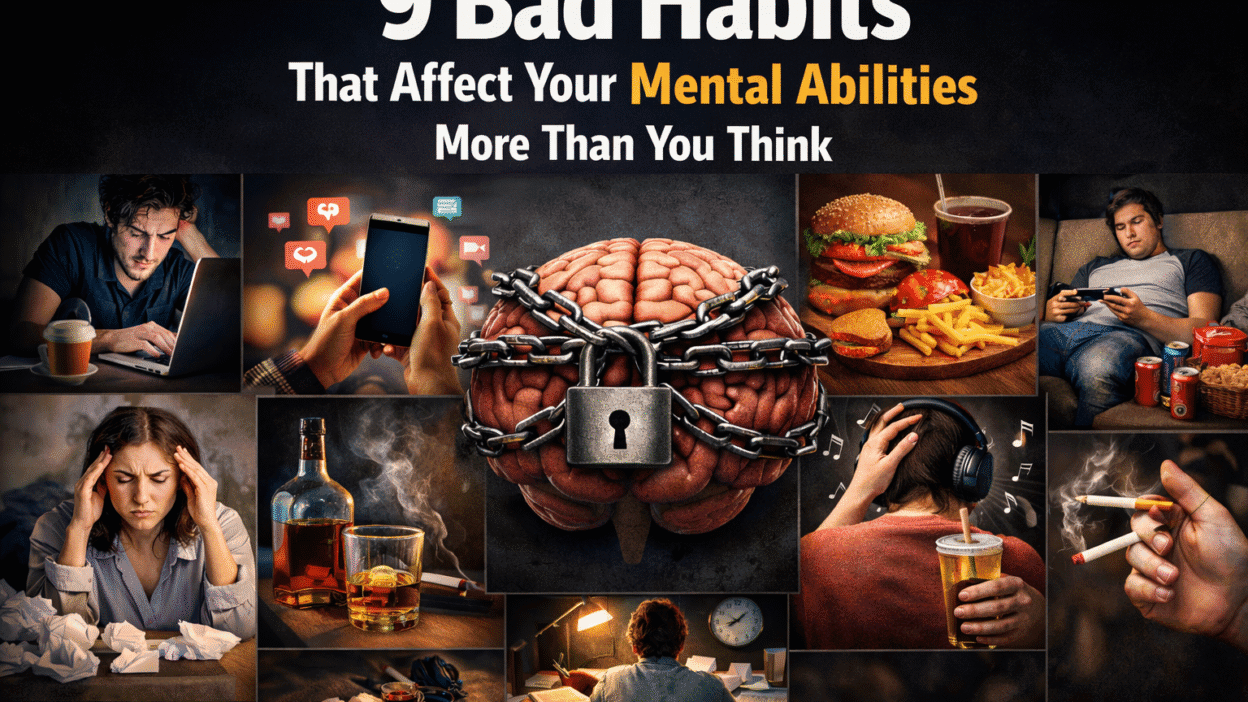
Below are nine common bad habits that undermine Mental Abilities far more than most people realize. More importantly, each habit can be replaced with healthier alternatives that support long-term brain performance, mental clarity, and cognitive strength.
1. Chronic Lack of Sleep
Sleep is one of the most essential pillars for maintaining strong Mental Abilities, yet it is often the first thing sacrificed in busy modern lifestyles. Quality sleep is not simply a period of rest—it is an active biological process during which the brain repairs itself, strengthens neural connections, and organizes information gathered throughout the day. During deep sleep stages, memories are consolidated, harmful toxins are cleared from brain tissue, and neural pathways responsible for learning and problem-solving are recalibrated. When sleep is consistently reduced or interrupted, Mental Abilities begin to deteriorate at a surprisingly fast pace.
A chronic lack of sleep directly affects key Mental Abilities such as focus, attention span, reasoning, and emotional regulation. Even mild sleep deprivation can reduce alertness and impair judgment, making everyday decisions more difficult. Over time, the brain struggles to retain new information, process complex ideas, and manage emotions effectively. As sleep debt accumulates, Mental Abilities related to creativity, learning speed, and memory recall weaken, increasing mental fatigue and reducing overall cognitive efficiency. news-medical
Long-term sleep deprivation also places the brain under constant stress. Elevated cortisol levels interfere with neural communication, gradually damaging areas of the brain associated with memory and learning. As a result, prolonged poor sleep significantly increases the risk of cognitive decline and long-term impairment of Mental Abilities, regardless of age.
What to do instead:
To protect and strengthen your Cognitive Skills, prioritize 7–9 hours of high-quality sleep each night. Establish consistent sleep and wake times to support your natural circadian rhythm. Reduce screen exposure and mental stimulation before bedtime, create a calm sleeping environment, and treat sleep as a non-negotiable investment in your Mental Abilities and long-term brain health.
2. Multitasking Too Often and Its Impact on Mental Abilities
Mental Abilities are significantly influenced by how we direct our focus and attention, yet in today’s fast-paced world, many people fall into the habit of multitasking—believing it boosts efficiency. Contrary to this common belief, scientific research strongly indicates that frequent multitasking doesn’t enhance productivity; it actually undermines Mental Abilities by forcing the brain to shift rapidly between tasks rather than genuinely handling multiple tasks simultaneously.
Neurological evidence highlights that what we call “multitasking” is typically rapid task-switching, which places a heavy cognitive load on the brain’s attention and control networks. Instead of performing tasks concurrently, the brain must disengage from one task and reorient to the next, consuming valuable cognitive resources each time. This repeated switching depletes mental energy and reduces overall focus, leading to fragmented thought and diminished cognitive efficiency.
Studies show that heavy multitaskers often perform worse on cognitive tasks involving memory, attention, and decision-making than those who focus on one activity at a time. Chronic multitasking has been linked to increased errors, slower task completion, and a reduced ability to filter out distractions—key components of well-functioning Cognitive Skills.
Moreover, research demonstrates a significant connection between multitasking behavior and poorer memory retention. When the brain’s attention is split between simultaneous tasks—such as listening to a lecture while scrolling a phone—encoding of new information becomes shallow. This makes it harder to store and retrieve information later, undermining the very foundation of memory and learning, two crucial aspects of Mental Abilities.
Frequent task switching also increases cognitive fatigue. Each time the brain refocuses, it expends precious mental energy that could otherwise be used for deeper thinking, creativity, or problem-solving. Over time, this accumulated fatigue erodes the brain’s capacity for sustained attention, strategic thinking, and efficient processing—core functions of strong Mental Abilities. neurosurges
What to do instead:
To protect and improve your Cognitive Skills, shift from multitasking to single-tasking. Give your full attention to one activity at a time, allowing your brain to engage deeply without unnecessary interruptions. Single-tasking strengthens concentration, reduces mistakes, preserves cognitive energy, and ultimately enhances long-term cognitive performance. This simple change—prioritizing focused work over constant task switching—can make a measurable difference in your cognitive effectiveness and overall mental clarity.
Learn more : Cognitive Load Theory: Why Your Brain is Overwhelmed and 7 Ways to Regain Mental Clarity
3. Excessive Screen Time and Its Harmful Impact on Mental Abilities
Mental Abilities—such as memory, attention, executive function, and the capacity to solve problems—depend heavily on how the brain is used and cared for. In today’s digital age, prolonged screen time has become a widespread habit that affects cognitive health far more than many people realize. Although technology offers countless benefits, excessive and unregulated screen use can undermine key Mental Abilities and overall brain functioning.
Scientific studies have shown that prolonged exposure to screens is associated with poorer cognitive performance. For example, research involving medical students found a clear negative correlation between high screen time and standardized test performance, suggesting that too much screen exposure may deplete the cognitive resources necessary for tasks that require attention, working memory, and problem-solving—core components of Mental Abilities. Excessive screen use also disrupts focus and concentration, making it harder for the brain to engage in deep thinking or sustain attention on demanding tasks.
The mental health consequences of excessive screen time further compound cognitive strain. Increased screen exposure has been linked to higher levels of depression, anxiety, and other mood disorders—conditions that negatively affect memory, decision-making, and emotional regulation, all of which are integral to strong Mental Abilities. What’s more, excessive screen use often contributes to social isolation by displacing face-to-face interactions and real-world engagement, decreasing opportunities to practice communication and emotional skills that support cognitive and social competencies.
Another significant concern is how screen use impacts sleep—a critical factor for cognitive health. Screen light, specifically blue light, can suppress melatonin production and disrupt circadian rhythms, leading to poorer sleep quality. Sleep disruption, in turn, weakens Mental Abilities by impairing memory consolidation, emotional regulation, and alertness. ctrjournal
While moderate, purposeful use of digital technology can sometimes support learning and skill development, passive or excessive screen engagement—especially when it replaces active mental pursuits—has repeatedly been linked to decreases in attention span, working memory, and overall cognitive flexibility, weakening essential Mental Abilities over time.
What to do instead:
To protect and strengthen your Mental Abilities, it’s important to set intentional limits on recreational screen time, take regular breaks from digital devices, and balance online activities with offline experiences that engage your mind in deeper, more meaningful ways. Focus on real-world interactions, physical activity, reading, creative hobbies, and restful sleep to give your brain the stimulation and recovery it needs to maintain optimal cognitive health.
4. Poor Nutrition Choices and Their Impact on Mental Abilities
Mental Abilities—including memory, focus, problem-solving, and emotional regulation—are heavily influenced by what we eat. While many people focus on diet for physical health or weight management, the connection between nutrition and cognitive function is often overlooked. Poor dietary choices can silently undermine Mental Abilities, reducing the brain’s efficiency and capacity for complex thinking.
The brain is an energy-intensive organ, consuming approximately 20% of the body’s daily calories despite accounting for only about 2% of body weight. Nutrients from food provide the fuel required for neurons to communicate, for neurotransmitters to function, and for synaptic plasticity—the brain’s ability to adapt and learn. Diets high in processed foods, refined sugars, and unhealthy fats trigger inflammation and oxidative stress, which directly impair cognitive function and weaken Mental Abilities over time. Studies have linked diets high in sugar and trans fats with lower memory performance and decreased learning efficiency.ncbi
Conversely, a nutrient-rich diet can enhance Mental Abilities by supporting brain structure and function. Omega-3 fatty acids, found in fatty fish like salmon, support synaptic plasticity and memory retention. B vitamins, antioxidants from fruits and vegetables, and minerals such as magnesium and zinc all play critical roles in neurotransmission and cognitive health. Adequate hydration is equally important, as even mild dehydration can reduce attention span, slow processing speed, and impair problem-solving—all essential components of Mental Abilities. health.harvard
Poor nutrition doesn’t only affect memory or focus; it also influences emotional regulation, energy levels, and stress resilience. Blood sugar spikes and crashes can lead to irritability, fatigue, and difficulty concentrating. Over time, these patterns further compromise Mental Abilities, creating a cycle where poor eating habits reduce cognitive performance, which can then lead to stress-eating or unhealthy food choices.
What to do instead:
To protect and strengthen your Mental Abilities, prioritize a balanced, nutrient-dense diet. Incorporate foods rich in omega-3 fatty acids, leafy greens, colorful vegetables, berries, nuts, whole grains, and lean protein. Limit processed foods, sugary snacks, and excessive caffeine. Stay hydrated throughout the day, as water supports optimal neural communication and mental performance. By consciously choosing foods that nourish the brain, you can maintain sharper focus, better memory, faster problem-solving, and stronger overall Mental Abilities for the long term.
5. Constant Stress and No Recovery Time: How It Harms Mental Abilities
Mental Abilities—including memory, focus, decision-making, and emotional regulation—are deeply affected by the levels of stress we experience daily. While some stress can be motivating, chronic, unrelenting stress is a silent saboteur of cognitive function. When stress becomes constant and recovery periods are minimal or nonexistent, Mental Abilities begin to deteriorate, even in otherwise healthy individuals.
Stress triggers the release of cortisol, a hormone that, in small doses, helps the brain respond to challenges. However, prolonged elevation of cortisol can damage critical brain regions, including the hippocampus, which is central to memory formation and retrieval, and the prefrontal cortex, which governs attention, planning, and complex problem-solving. Research has shown that chronic stress impairs synaptic plasticity, reduces neurogenesis (the creation of new neurons), and weakens neural pathways—key elements of strong Mental Abilities.
Beyond memory and focus, chronic stress can compromise emotional regulation, increase impulsivity, and reduce resilience. Individuals under constant stress often find it harder to concentrate, make thoughtful decisions, and adapt to new situations—functions that are core to robust Mental Abilities. Stress can also exacerbate mental fatigue, making everyday cognitive tasks feel overwhelming. Over time, this combination of cognitive and emotional strain can create a downward spiral, where reduced Mental Abilities make it more difficult to manage stress effectively. psychologytoday
Modern lifestyles often make it difficult to fully disconnect and recharge. Back-to-back work, constant notifications, and social pressures leave little time for mental recovery. Without deliberate rest, the brain does not have the opportunity to process information, consolidate memories, or reset neural circuits—all of which are essential for maintaining strong Mental Abilities.
What to do instead:
To protect and enhance your Mental Abilities, it is essential to incorporate regular stress management and recovery strategies. Mindfulness practices, such as meditation or deep breathing exercises, have been shown to reduce cortisol levels and improve attention and working memory. Physical activity, including walking, yoga, or resistance training, promotes neurogenesis and helps the brain recover from cognitive stress. Scheduled downtime, hobbies, and quality sleep are also crucial for resetting the mind and preserving Mental Abilities. By creating intentional recovery periods and actively managing stress, you can maintain sharper focus, better memory, and improved emotional regulation, safeguarding your Mental Abilities against the damaging effects of chronic stress. apa
6. Lack of Mental Stimulation and Its Effect on Mental Abilities
Mental Abilities, such as memory, problem-solving, attention, and cognitive flexibility, require regular exercise to remain sharp. Just as muscles atrophy when they are not used, the brain’s capacity to learn, adapt, and process information declines when it is deprived of mental challenges. Unfortunately, many people fall into routines that provide little cognitive stimulation, unknowingly weakening their Mental Abilities over time.
When the brain is consistently exposed to repetitive tasks, passive entertainment, or minimal intellectual engagement, neural pathways that support complex thinking and memory formation begin to weaken. This lack of stimulation affects synaptic plasticity, which is the brain’s ability to create and strengthen connections between neurons—a process crucial for learning, memory retention, and the development of new Mental Abilities.
Cognitive stagnation can also reduce creativity and problem-solving skills. Without challenges that push the mind beyond its comfort zone, the brain’s executive functions—planning, reasoning, and decision-making—can atrophy. Even tasks that seem simple, such as remembering appointments or organizing daily responsibilities, may require more effort when Mental Abilities have been underused. Studies show that adults who engage in intellectually stimulating activities regularly demonstrate better memory performance and slower cognitive decline compared to those with minimal mental engagement.
Social and professional routines that lack novelty or complexity can exacerbate this problem. Passive consumption, such as binge-watching TV without active engagement, mindless scrolling on social media, or performing repetitive work tasks, provides little stimulation for the brain. Over time, this reduces mental agility, diminishes learning capacity, and limits the development of new Mental Abilities.
What to do instead:
To strengthen your Mental Abilities, actively seek out activities that challenge your brain and require focused thought. Learning a new language, practicing a musical instrument, solving puzzles, reading complex texts, or engaging in strategic games stimulates neural pathways and encourages neuroplasticity. Lifelong learning, professional development, and creative hobbies all contribute to maintaining sharp Mental Abilities by constantly exercising memory, reasoning, and problem-solving skills. Even small, daily mental challenges—like recalling details from a book, planning a new project, or experimenting with a new recipe—can make a significant difference in preserving and enhancing your cognitive function over time.brainmdhealth
7. Social Isolation and Its Impact on Mental Abilities
Mental Abilities, including memory, attention, problem-solving, and emotional intelligence, are not only shaped by internal habits but also by our social interactions. Human beings are inherently social creatures, and meaningful engagement with others plays a critical role in keeping the brain active and healthy. Prolonged social isolation, whether due to lifestyle, work, or personal circumstances, can quietly undermine Mental Abilities over time.
Social interaction stimulates multiple areas of the brain simultaneously. Conversations, collaborative problem-solving, and emotional exchanges require attention, memory recall, reasoning, and emotional regulation—all essential components of Mental Abilities. When social contact is limited, the brain receives fewer opportunities to practice these skills, which can lead to cognitive decline and reduced mental agility. Research shows that individuals with minimal social interaction have higher risks of memory impairment, slower cognitive processing, and increased susceptibility to mental health challenges. ncbi
Social isolation also impacts emotional regulation, an often-overlooked aspect of Mental Abilities. Human connection helps manage stress, reinforces adaptive coping strategies, and supports psychological resilience. Without regular interaction, stress responses can become amplified, anxiety may increase, and the ability to make thoughtful decisions may be impaired. This combination can gradually erode Mental Abilities, affecting both cognitive and emotional performance.
Technology can provide some social connection, but it is often not a complete substitute for in-person engagement. Face-to-face interactions involve complex nonverbal cues, empathy, and real-time problem-solving, which digital communication cannot fully replicate. Reduced physical social interaction deprives the brain of critical exercises that strengthen Mental Abilities and cognitive resilience.
What to do instead:
To preserve and enhance your Mental Abilities, prioritize meaningful social engagement. Maintain regular contact with family and friends, participate in group activities or volunteer work, and engage in discussions that challenge your thinking and perspective. Even small, consistent social interactions—such as phone calls, community meet-ups, or collaborative projects—can stimulate brain activity, improve memory and attention, and reinforce emotional intelligence. By nurturing social connections, you create an environment that naturally strengthens Mental Abilities and supports long-term cognitive health.
8. Sedentary Lifestyle and Its Effect on Mental Abilities
Mental Abilities—such as memory, attention, problem-solving, and cognitive flexibility—are strongly influenced by physical activity. While exercise is often associated with cardiovascular health, weight management, and muscular strength, its impact on brain function is equally profound. A sedentary lifestyle, characterized by prolonged sitting and minimal physical movement, can significantly weaken Mental Abilities over time.
Physical activity promotes blood flow to the brain, delivering oxygen and essential nutrients that support neuronal function and synaptic plasticity, which are critical for learning and memory. Conversely, inactivity reduces circulation, slows neural metabolism, and limits the brain’s ability to adapt to new information. Studies have demonstrated that individuals who lead sedentary lives often experience declines in executive function, attention span, and processing speed—key components of Mental Abilities.
Exercise also stimulates the production of brain-derived neurotrophic factor (BDNF), a protein that supports the growth and survival of neurons and enhances cognitive function. Lower levels of BDNF, commonly found in sedentary individuals, are associated with reduced memory retention, slower learning, and decreased problem-solving capabilities—directly impacting Mental Abilities.
Beyond the direct physiological benefits, a sedentary lifestyle can indirectly harm Mental Abilities through negative effects on mood and stress. Physical inactivity increases the risk of anxiety and depression, which impair focus, memory, and decision-making. Over time, reduced movement can create a vicious cycle where declining Mental Abilities lead to lower motivation to engage in physical activity, further compounding cognitive decline. apa
What to do instead:
To protect and enhance your Mental Abilities, incorporate regular physical activity into your daily routine. Aerobic exercises, such as walking, running, swimming, or cycling, boost circulation and BDNF production, supporting memory and cognitive flexibility. Strength training and balance exercises also improve brain function by enhancing coordination and promoting neural connectivity. Even simple habits, like taking frequent movement breaks during work, stretching, or walking meetings, can stimulate the brain and preserve Mental Abilities over time. By combining physical activity with mental challenges, you create a powerful synergy that strengthens both the body and the mind. mayoclinic
9. Ignoring Mental Health and Its Impact on Mental Abilities
Mental Abilities—including memory, attention, reasoning, problem-solving, and emotional regulation—are deeply interconnected with mental health. When mental health is neglected, whether through untreated stress, anxiety, depression, or emotional burnout, cognitive function suffers significantly. Ignoring these warning signs can silently erode Mental Abilities, even if physical health appears intact.
Mental health disorders disrupt neural pathways responsible for focus, memory consolidation, and decision-making. For example, chronic anxiety or depression can impair working memory, reduce attention span, and slow processing speed—all core aspects of Mental Abilities. Research has shown that individuals experiencing untreated mental health challenges often perform worse on cognitive tasks compared to those who receive appropriate support and interventions.
Emotional stress further compounds cognitive strain. When the brain is constantly processing negative emotions or stress hormones such as cortisol, it becomes more difficult to think clearly, plan effectively, or respond adaptively to challenges. Over time, this chronic cognitive load reduces the efficiency of Mental Abilities, weakening problem-solving skills, creativity, and resilience.
Ignoring mental health can also create a cycle where declining Mental Abilities exacerbate stress and emotional strain. Difficulty concentrating or remembering information increases frustration, lowers self-confidence, and can lead to social withdrawal. Without intervention, this feedback loop continues to erode both cognitive performance and emotional well-being.
What to do instead:
To protect and enhance your Mental Abilities, prioritize mental health as part of your daily routine. Seek professional support when needed, practice mindfulness and stress management techniques, and create healthy boundaries to reduce emotional strain. Activities such as journaling, meditation, therapy, and adequate sleep can help maintain mental balance and restore cognitive function. Engaging in supportive social relationships and building emotional resilience further strengthen Mental Abilities, ensuring your mind remains sharp, adaptable, and capable of high-level cognitive performance.harvard
Discover more :15 Clear Signs You Might Have a Mental Illness (and When to Seek Help)
Conclusion
Your Mental Abilities are among your most valuable assets, influencing everything from memory and focus to problem-solving and emotional regulation. While modern life presents numerous challenges—from chronic stress and multitasking to excessive screen time and poor nutrition—these threats to cognitive health are not inevitable. Many of the habits that quietly erode Mental Abilities can be identified, managed, and reversed with conscious effort.
Improving sleep quality, managing stress, engaging in physical activity, maintaining a nutrient-rich diet, and seeking meaningful social interaction all contribute to stronger, sharper Mental Abilities. Likewise, prioritizing mental stimulation, reducing multitasking, and addressing mental health concerns help preserve cognitive function over the long term.
The key takeaway is that Mental Abilities are not fixed—they can be strengthened at any age through deliberate habits and lifestyle choices. By becoming aware of the nine common habits that undermine Mental Abilities and actively replacing them with healthier alternatives, you can maintain clarity, resilience, and cognitive performance for years to come.
Your brain is a living system that thrives on challenge, care, and balance. Protecting your Mental Abilities is not just about preventing decline—it’s about unlocking your full potential and ensuring that your mind remains sharp, agile, and ready to meet life’s demands.