

Table of Contents
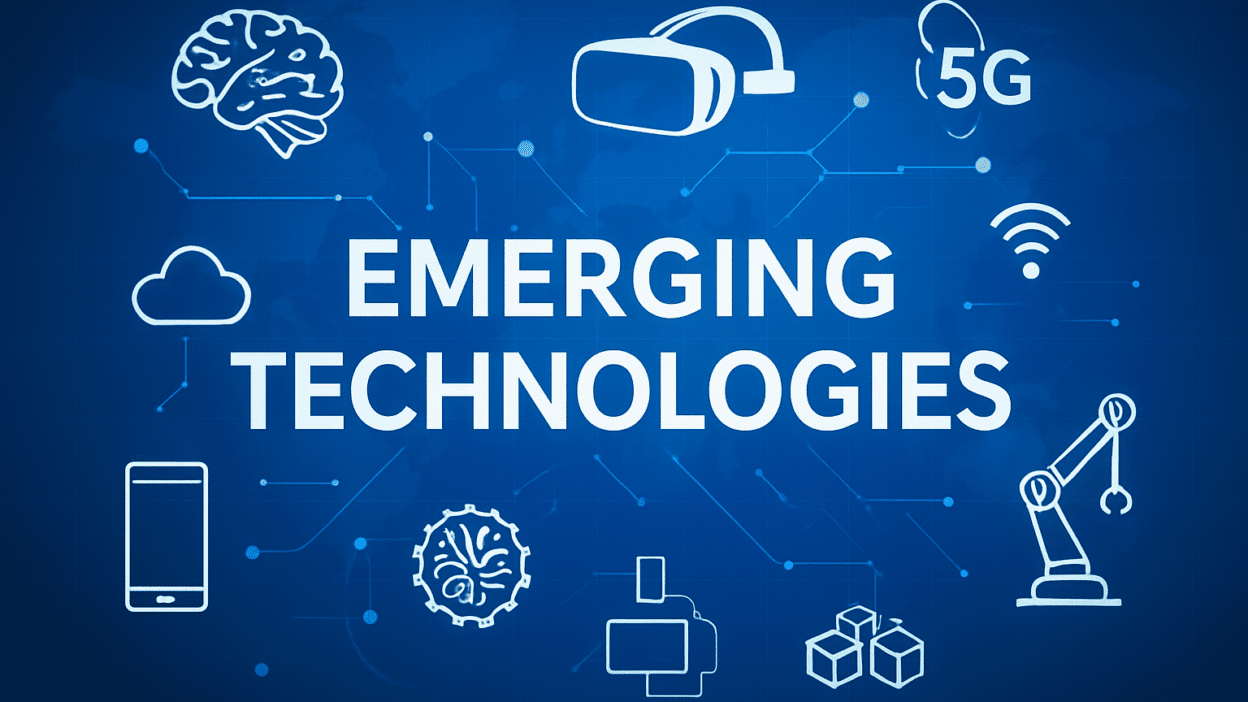
The global digital landscape is undergoing a historic transformation fueled by Emerging Technologies. Organizations worldwide are leveraging these innovations to redefine customer experience, operational efficiency, and value creation. From artificial intelligence and cloud computing to immersive technologies and digital twins, the shift toward intelligent and interconnected experiences marks a new digital economy.
This report explores the Top 10 Emerging Technologies shaping the next era of digital experience. It examines their impact on business, consumer behavior, and market competitiveness, while providing data-driven insights and practical implications for leaders.
Introduction: The Rise of Emerging Technologies in the Digital Age
The digital economy is entering a defining moment in history—one where Emerging Technologies have shifted from optional enhancements to essential drivers of progress. Digital transformation is no longer a competitive advantage reserved for early adopters; it has become a global mandate across every sector, from finance and healthcare to retail, manufacturing, and government services. Today, organizations are not debating whether they should implement Emerging Technologies—the real question is how rapidly and intelligently they can integrate them to stay relevant in an increasingly dynamic marketplace.
Research from leading global analysts reveals a measurable performance gap between companies that adopt Emerging Technologies and those that resist change. Businesses that strategically invest in advanced digital capabilities experience:
- 3–5× higher customer engagement, thanks to smarter interactions and personalized journeys
- 30–50% faster innovation cycles, driven by AI automation, agile methodologies, and data intelligence
- 20–40% reductions in operational cost, powered by process automation and real-time decision systems
- Substantial increases in customer lifetime value (CLV), as digital experiences become more predictive, intuitive, and trustworthy
What is clear from these trends is that Emerging Technologies are fundamentally reshaping how organizations think, operate, compete, and deliver value. They are redefining the meaning of “digital experience.” Where companies once focused primarily on surface-level interfaces—websites, apps, and touchpoints—the modern digital experience is now built on a deeper foundation of intelligence, personalization, automation, resilience, and interconnected digital ecosystems.
Today’s consumers expect every interaction to be seamless, fast, context-aware, and uniquely tailored to their needs. This expectation is powered by Emerging Technologies such as artificial intelligence, generative AI, Internet of Things (IoT), AR/VR, edge computing, 5G networks, and blockchain. These innovations work together to deliver smarter insights, richer engagement, frictionless services, and more secure digital environments.
As transformation accelerates, organizations are recognizing that the future of customer experience depends on their ability to blend physical and digital worlds into a unified, intelligent system. Businesses that fail to adopt Emerging Technologies risk falling behind competitors who are already leveraging these tools to innovate faster, anticipate customer needs, and create long-lasting value.
This report examines the ten most influential Emerging Technologies shaping the next era of digital experience—innovations that are redefining industries, elevating customer expectations, and creating new pathways for growth in the digital age.
1.
Artificial Intelligence Personalization
Artificial Intelligence (AI) has emerged as one of the most influential Emerging Technologies redefining the digital experience landscape. As organizations compete in an environment where customers expect immediate, intuitive, and hyper-personalized interactions, AI-driven personalization has become a strategic necessity rather than an optional enhancement. It is now the core engine that powers predictive digital ecosystems capable of understanding, anticipating, and responding to user needs in real time.
Within the sphere of Emerging Technologies, AI stands out because of its unmatched ability to process massive datasets, identify patterns, and generate insights that were previously inaccessible to human teams. Modern AI systems continuously analyze user behavior—everything from browsing patterns and purchase history to micro-interactions and contextual signals—to create a seamless experience tailored to each individual user.
AI’s Core Capabilities in Personalization
AI-driven personalization incorporates several advanced capabilities that together elevate the digital experience:
• Behavior Prediction
Machine learning models detect and forecast user intentions before they are explicitly expressed. This predictive intelligence enables proactive engagement, reducing friction and improving relevance at every step of the customer journey.
• Automated Segmentation
Unlike traditional segmentation models, AI creates dynamic, micro-level audience segments that update in real time. Users are grouped based on behaviors, emotions, preferences, and context—significantly enhancing targeting precision.
• Real-Time Personalization
AI responds instantly to user behavior, adjusting recommendations, content, messaging, and navigation structures as the interaction unfolds. This dynamic personalization is central to modern digital competitiveness.
• Dynamic Content Optimization
AI evaluates multiple content variations simultaneously and automatically selects the best-performing option for each user. This continuous optimization ensures that digital platforms deliver maximum engagement and relevance.
• Intelligent Recommendation Systems
Recommendation engines powered by AI have become essential to digital businesses. They drive product discovery, increase session duration, and influence purchasing behavior across e-commerce, entertainment, education, and media.
Collectively, these capabilities position AI as one of the most transformative Emerging Technologies fueling next-generation digital experiences.
Business and Performance Impact
Organizations adopting AI-driven personalization are reporting substantial performance improvements across customer engagement, satisfaction, and revenue metrics. According to industry research, AI-enabled personalization leads to:
- 50% increase in customer retention, driven by more relevant, timely, and meaningful interactions
- 35% improvement in conversion rates, due to better alignment between user intent and delivered content
- 25% reduction in user journey friction, as AI eliminates unnecessary steps and optimizes decision pathways
These outcomes illustrate how Emerging Technologies, particularly AI, allow businesses to scale personalization across millions of users with accuracy and efficiency that manual systems could never achieve.
AI empowers companies to move from reactive strategies to proactive and predictive digital ecosystems—precisely the type of transformation that defines industry leaders in the modern digital economy.
Strategic Importance of AI in the Ecosystem of Emerging Technologies
In the broader landscape of Emerging Technologies, AI is the connective layer enabling synergy across other innovations such as IoT, 5G, AR/VR, and edge computing. By integrating with these technologies, AI enhances speed, intelligence, context-awareness, and personalization—four pillars of the future digital experience.
Whether optimizing product recommendations in e-commerce, tailoring financial advice in banking, or enhancing learning paths in education, AI is the driving force behind digital systems that grow smarter with every interaction.
AI’s ability to deliver personalization at scale is not only shaping the present but also defining the trajectory of future digital ecosystems.
Generative AI and Intelligent Content Automation
Generative AI is emerging as one of the most transformative forces in the digital landscape, fundamentally reshaping how organizations create, automate, and deliver content. As a core component of Emerging Technologies, generative AI leverages advanced machine learning models to produce high-quality content across multiple formats—enabling businesses to operate faster, more creatively, and more efficiently than ever before.
Capabilities of Generative AI
Modern generative AI platforms, central to the field of Emerging Technologies, are capable of producing a wide range of outputs, including:
- Text: From compelling marketing copy and personalized email campaigns to detailed product descriptions and technical documentation, AI-generated text can be tailored to specific audiences, tones, and styles.
- Images: AI-powered tools can generate highly realistic images, illustrations, or concept visuals, opening new possibilities for design, advertising, and branding.
- Audio: Text-to-speech engines and AI-driven music composition tools enable rapid creation of podcasts, voiceovers, and background tracks without traditional recording setups.
- Simulations: Businesses can produce realistic simulations for training, modeling, or testing scenarios, helping teams anticipate outcomes and optimize strategies.
- Interactive Interfaces: AI can power dynamic, responsive content such as chatbots, virtual assistants, and personalized web experiences that adapt to user behavior in real time.
Why Generative AI Matters
The impact of generative AI on business operations cannot be overstated. By automating labor-intensive content production, companies can drastically reduce time-to-market while expanding the variety and personalization of their offerings. Imagine producing thousands of unique advertisements, educational modules, or product demos within hours—tasks that previously required weeks of human effort.
In the broader context of Emerging Technologies, generative AI not only drives efficiency but also unlocks unprecedented creative potential. By generating multiple content variations instantly, it allows teams to experiment freely, test ideas rapidly, and fine-tune messaging for maximum engagement. Businesses can harness AI to explore novel concepts without the constraints of traditional production pipelines.
Enterprise Applications of Generative AI
The applications of generative AI span virtually every industry, making it a key pillar in the ecosystem of Emerging Technologies:
- Digital Marketing: Personalized ad campaigns, social media content, and email communications can now be created at scale with precision targeting.
- Product Customization: AI can generate design variations for products, packaging, or branding elements, allowing companies to cater to niche audiences effectively.
- Synthetic Data Generation: AI can create realistic datasets for machine learning model training, software testing, and predictive analytics without relying on sensitive or costly real-world data.
- Rapid Prototyping: Designers and engineers can use AI to quickly develop and visualize concepts, significantly accelerating the innovation process.
- Chatbots and Virtual Assistants: Intelligent conversational agents powered by generative AI enhance customer service, streamline workflows, and improve user engagement.
The Strategic Advantage
For modern enterprises, generative AI is no longer a novelty—it is an essential tool for achieving competitive advantage. Companies that embrace AI-driven content creation gain the ability to scale communications, innovate with speed, and deliver experiences that resonate with diverse audiences. As a cornerstone of Emerging Technologies, generative AI empowers businesses to do more than just keep up—it enables them to lead.
Augmented Reality (AR)
Augmented Reality (AR) is revolutionizing the way we interact with our surroundings by overlaying digital information onto the physical world. As one of the fastest-growing Emerging Technologies, AR enriches real-world experiences across multiple industries, providing both businesses and consumers with innovative ways to interact with products, services, and information.
Key Applications of AR
AR is increasingly being adopted in diverse sectors:
- Retail: Customers can virtually try on clothing, accessories, or makeup, providing a “try-before-you-buy” experience that increases satisfaction and reduces returns.
- Real Estate: Prospective buyers can visualize properties with digital overlays, exploring designs, layouts, or furniture arrangements before making decisions.
- Education: Interactive AR lessons create immersive learning environments, enhancing engagement and knowledge retention.
- Automotive: Drivers and buyers benefit from heads-up displays, real-time navigation overlays, and virtual vehicle customization tools.
- Healthcare: AR assists surgeons with real-time imaging and helps medical students visualize anatomy in three dimensions.
User Experience Advantages
The rise of AR as a core element of Emerging Technologies is largely due to the unique user experience benefits it provides:
- Try-Before-You-Buy Experiences: AR allows customers to interact with products virtually, boosting confidence in purchase decisions.
- Enhanced Decision-Making: Overlaying digital information helps users compare options, understand features, and make informed choices.
- Higher Product Confidence: Interactive previews reduce uncertainty and increase trust in products or services.
- Interactive Learning Ecosystems: AR transforms traditional education and training into engaging, hands-on experiences.
By creating immersive, context-aware interactions, AR significantly increases engagement and strengthens the connection between digital content and the real world.
4. Virtual Reality (VR): Immersing Users in Digital Worlds
While AR enhances the physical environment, Virtual Reality (VR) creates entirely digital experiences that transport users into fully simulated worlds. Recognized as one of the most transformative Emerging Technologies, VR is redefining how individuals learn, collaborate, and interact with digital environments.
Key Applications of VR
VR has proven impactful across a variety of industries:
- Training and Simulation: VR provides realistic practice scenarios for high-risk professions, allowing learners to gain experience without danger.
- Entertainment and Gaming: Immersive VR worlds offer unparalleled engagement, revolutionizing gaming, live events, and media consumption.
- Remote Collaboration: Teams can interact in virtual spaces, making global collaboration more effective and interactive.
- Virtual Tourism: VR enables users to explore distant locations or historical sites without leaving home.
- Metaverse Environments: Companies are leveraging VR to create digital spaces for social interaction, shopping, and brand engagement.
Enterprise Impact
Organizations adopting VR as part of their Emerging Technologies strategy see measurable benefits:
- Risk Reduction and Skill Retention: VR training programs can reduce operational risks and improve knowledge retention by up to 70%.
- Enhanced Empathy and Understanding: Immersive simulations allow employees and customers to experience scenarios from new perspectives, improving communication, empathy, and decision-making.
- Improved Customer Experience: VR enables brands to create emotionally engaging, memorable experiences that strengthen loyalty and satisfaction.
By immersing users in entirely digital environments, VR not only enhances training and entertainment but also drives meaningful business outcomes across multiple sectors.
5. 5G and Ultra-Fast Connectivity: Powering the Digital Future
Connectivity serves as the backbone for virtually all Emerging Technologies, and 5G is at the forefront of this transformation. By delivering unprecedented speed and responsiveness, 5G enables new levels of interaction, innovation, and efficiency across industries.
Core Capabilities of 5G
5G networks provide a robust foundation for next-generation digital experiences:
- High Bandwidth: Supports large-scale data transfer, enabling smoother streaming, real-time analytics, and complex applications.
- Ultra-Low Latency: Minimizes delays in communication, making instantaneous interactions possible for AR/VR, gaming, and industrial applications.
- Edge Computing: Processes data closer to the source, improving performance and reducing network strain.
- IoT Networks: Facilitates the rapid expansion of connected devices, from smart homes to industrial sensors.
- AR/VR Experiences: Delivers seamless augmented and virtual reality interactions without lag or disruption.
Transforming Digital Interaction
The adoption of 5G is reshaping how users and businesses engage digitally:
- Faster loading times improve user engagement and satisfaction.
- HD and 4K video streaming in real time enhances media consumption experiences.
- Remote work and collaboration are more fluid, reliable, and immersive.
- IoT ecosystems operate with increased efficiency, unlocking smarter automation and monitoring.
With 5G as a core enabler, enterprises can build more immersive, responsive, and data-rich digital experiences.
6. Internet of Things (IoT): Connecting the Physical and Digital Worlds
The Internet of Things (IoT) links everyday physical devices to digital networks, creating ecosystems that can monitor, interact, and respond intelligently. As one of the most widely adopted Emerging Technologies, IoT is redefining business processes and consumer experiences across industries.
Examples of IoT Innovations
IoT has unlocked countless applications that improve convenience, efficiency, and insight:
- Smart Retail Shelves: Track inventory in real time and provide personalized promotions to shoppers.
- Wearable Health Devices: Monitor vital signs, physical activity, and chronic conditions to improve personal wellness.
- Connected Vehicles: Enable advanced navigation, safety systems, and predictive maintenance.
- Intelligent Homes: Automate lighting, climate, and security systems for convenience and energy efficiency.
- Environmental Sensing Systems: Collect and analyze data for agriculture, urban planning, and disaster management.
By transforming ordinary environments into data-driven ecosystems, IoT allows businesses and individuals to make smarter decisions, improve efficiency, and enhance daily life.
7. Blockchain for Trust and Transparency: Securing the Digital Experience
Blockchain technology provides decentralized, tamper-proof systems that establish digital trust—a critical element of modern interactions. Recognized as one of the most secure Emerging Technologies, blockchain is redefining how organizations manage data, verify authenticity, and maintain transparency.
Key Applications of Blockchain
Blockchain enhances digital systems across multiple areas:
- Digital Identity: Provides secure, verifiable identity management for users and organizations.
- Supply Chain Visibility: Tracks goods in real time, ensuring accountability and authenticity.
- Data Protection: Prevents unauthorized access and tampering, safeguarding sensitive information.
- Transparent Transactions: Guarantees integrity and traceability in financial and digital operations.
Why Users Trust Blockchain
Customers increasingly value transparency and reliability. By guaranteeing authenticity and protecting data integrity, blockchain strengthens user confidence, fosters loyalty, and ensures that digital systems are trustworthy.
8. Edge Computing
Edge computing processes data closer to the user, reducing latency and improving responsiveness. It is a powerful addition to the suite of Emerging Technologies enabling:
- Real-time analytics
- Autonomous systems
- Smart cities
- Industrial automation
Impact on User Experience
Faster data processing improves digital performance, reliability, and personalization—especially in high-traffic applications.
9. Voice Assistants & Conversational UX
Voice-driven interfaces are reshaping communication. Among Emerging Technologies, voice UX improves:
- Accessibility
- Ease of use
- Customer service
- Hands-free interaction
- Convenience and speed
Market Growth
Voice commerce alone is projected to exceed $80 billion annually. Its natural, intuitive interaction model is crucial for inclusive digital design.
10. Digital Twins
Digital twins replicate real-world systems, enabling simulation, forecasting, and optimization. As one of the most advanced Emerging Technologies, they are used in:
- Manufacturing
- Urban planning
- Retail
- Healthcare
- Energy
Benefits
- Predictive maintenance
- Real-time monitoring
- Cost reduction
- Improved decision-making
Digital twins merge physical and digital experience into one holistic environment.
- Explore how smart infrastructure is evolving:
10 Powerful Ways Companies Reinventing Themselves in AI to Drive Growth and Innovation
visite :McKinsey Digital Insights
Conclusion
The world is entering a new era where Emerging Technologies redefine how people interact, learn, work, and consume information. Companies that adapt quickly will lead their industries; those that delay risk falling behind. The future belongs to organizations that embrace intelligence, personalization, transparency, and immersive experiences.