

Table of Contents
Creating headlines that truly capture attention and drive traffic is both an art and a science. In today’s fast-paced digital world, readers are bombarded with endless content every second, scrolling through social media feeds, news sites, and search results. A headline isn’t just a few words at the top of your article—it’s the very first impression a reader gets. It determines whether someone stops to engage with your content or scrolls past without a second thought.
A well-crafted, click worthy headline can be the difference between your content going viral or being lost in the noise. It sets the tone for your article, sparks curiosity, and promises value. But writing headlines that consistently grab attention isn’t always easy. It requires understanding your audience, knowing what motivates them, and applying proven strategies to create interest.
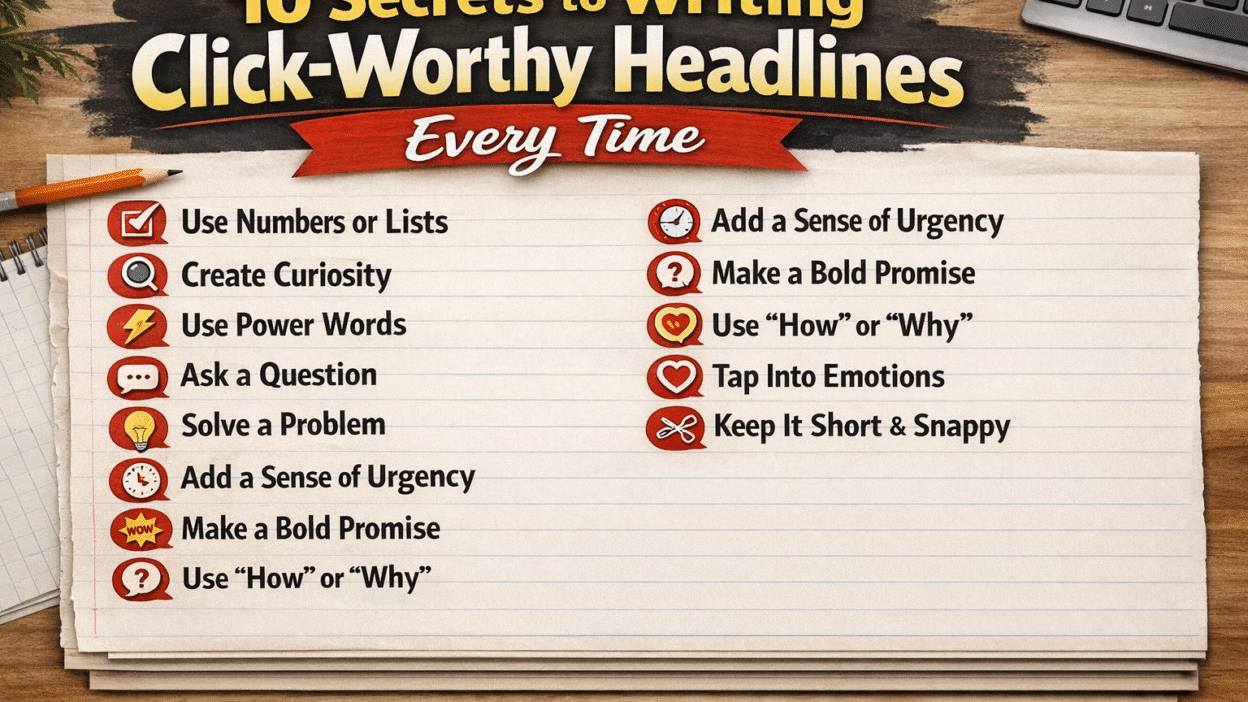
In this guide, we’ll uncover 10 powerful secrets to writing click worthy headlines that consistently draw readers in. Whether you’re a blogger, marketer, or content creator, mastering these techniques will help your content stand out, increase engagement, and drive more traffic than ever before. By the end, you’ll have a clear framework for crafting headlines that not only attract clicks but also keep readers eager to consume your content.
1. Start With Your Audience in Mind
The foundation of every click worthy headline begins with a deep understanding of your audience. You can write the most clever or catchy headline in the world, but if it doesn’t resonate with the people you’re trying to reach, it will likely be ignored. Before putting pen to paper—or fingers to keyboard—take the time to think about who your readers are.
Consider their interests, challenges, and goals. What problems are they trying to solve? What questions are they asking online? What kind of content do they tend to click on and share? By knowing your audience, you can craft headlines that speak directly to their needs and desires, instantly making your content more compelling and click worthy.
For example, a business professional searching for productivity tips might respond to a headline like, “10 Time-Saving Hacks Every Busy Professional Needs to Know,” while a fitness enthusiast might be drawn to, “7 Proven Strategies to Boost Your Energy Before Morning Workouts.” Both headlines promise value, but they are tailored to very different audiences.
Understanding your audience also helps you choose the right tone, words, and style. A playful, humorous headline might work for a lifestyle blog but fall flat for a financial advice article. Tailoring your headline to your audience ensures it resonates immediately, increasing the likelihood that it will be noticed, shared, and ultimately clicked. Remember, a headline that aligns perfectly with the reader’s expectations is naturally click worthy.
2. Use Numbers and Lists
One of the most effective ways to make a headline instantly click-worthy is to incorporate numbers and lists. Numbers give readers a clear expectation of what they’ll get, breaking down information into easily digestible pieces. For example, a headline like “10 Secrets to Writing Click-Worthy Headlines Every Time” tells the reader exactly what to expect—ten actionable tips—making it far more appealing than a vague or general statement.
Numbers also help your content stand out in crowded feeds. In a sea of text, numbered headlines catch the eye and signal structure and clarity. Readers are naturally drawn to headlines with numbers because they imply efficiency. They think, “I can read this quickly and get tangible results,” which is a huge motivator for clicks.
Lists also work well psychologically. Humans are wired to appreciate patterns and organization, and numbered or bulleted content feels manageable. A headline promising a list of “7 proven ways” or “5 essential strategies” gives the impression of a simple, step-by-step solution, which makes your content more click worthy and shareable.
Beyond clarity, numbers create curiosity. Odd numbers, in particular, often perform better because they stand out and feel more specific, while even numbers can appear formulaic. Experimenting with different numbers in your headlines can help you identify which ones resonate most with your audience.
By strategically using numbers and lists, you can make your headlines not only more organized but also inherently more click worthy, increasing engagement and the likelihood that readers will dive into your content.
3. Include Power Words
Adding power words to your headlines is one of the most reliable ways to make them click worthy. Power words are emotionally charged terms that trigger curiosity, excitement, urgency, or even fear. They grab attention instantly and compel readers to take action. Words like “secret,” “proven,” “ultimate,” “essential,” “shocking,” and “exclusive” can transform an ordinary headline into one that feels irresistible.
Power words work because they speak directly to the reader’s emotions. Humans don’t make decisions based purely on logic—they respond to feelings first. A headline like “10 Proven Secrets to Writing Click-Worthy Headlines” immediately communicates value and credibility, while also sparking curiosity about what those secrets might be. Readers feel they are about to uncover insider knowledge or gain a competitive edge, which makes them more likely to click.
The key is to use power words strategically and sparingly. Overloading a headline with too many strong terms can make it feel forced or spammy, reducing its credibility. Instead, select one or two words that enhance the promise of your content and amplify the reader’s desire to know more.
In addition to emotional appeal, power words also improve the readability and memorability of your headline. A click worthy headline should not only attract attention but also stick in the reader’s mind long enough for them to take action. When chosen wisely, power words create a sense of urgency and excitement, turning casual scrollers into engaged readers who are eager to dive into your content.
4. Make It Clear and Specific
Clarity and specificity are essential components of a click-worthy headline. Readers scroll quickly through content, and if your headline is vague or confusing, they won’t pause to engage with it. A clear headline immediately communicates the benefit or value of your content, leaving no doubt about what the reader will gain by clicking.
Specific headlines stand out because they promise concrete information rather than general ideas. For instance, compare “Tips for Better Writing” with “10 Secrets to Writing Click-Worthy Headlines Every Time.” The second headline is not only more precise, but it also communicates exactly how many tips the reader will receive and what the focus will be, making it inherently more click worthy.
Being specific also builds trust with your audience. When readers know exactly what to expect, they are more likely to click because the headline aligns with their needs. Avoid vague adjectives or ambiguous phrases that leave readers guessing. Instead, highlight clear outcomes, tangible results, or actionable insights. For example, words like “step-by-step,” “proven,” or “essential” add credibility and reinforce the value of your content.
Additionally, clarity enhances shareability. A specific, well-defined headline is easier for readers to remember and more likely to be shared on social media or recommended to others. When your headline communicates its value in a concise and precise way, it naturally becomes more click worthy, increasing both engagement and traffic to your content.
5. Use Emotional Triggers
One of the most powerful ways to create a click worthy headline is by tapping into your readers’ emotions. Humans are emotional beings, and our decisions—especially online—are often driven more by feelings than logic. Headlines that evoke curiosity, excitement, urgency, or even fear are far more likely to capture attention and prompt clicks.
Emotional triggers work because they connect with the reader on a personal level. For example, a headline like “The Shocking Secrets That Could Double Your Blog Traffic” uses curiosity and surprise to compel the reader to click. Similarly, “5 Essential Tips You’re Missing to Boost Productivity” triggers a sense of urgency and a fear of missing out (FOMO). By appealing to these emotions, your headline becomes not just informative, but irresistible—making it truly click worthy.
The key is balance. You want to spark emotion without overdoing it, which could make your headline feel exaggerated or clickbaity. The most effective headlines subtly inspire curiosity or urgency while promising real value. For instance, combining power words with emotional triggers—like “ultimate,” “proven,” or “essential”—reinforces the reader’s desire to engage.
Understanding your audience’s emotional drivers is essential for this strategy. Different groups respond to different triggers. A professional audience may respond to efficiency and authority, while a lifestyle audience might respond to excitement or curiosity. By carefully selecting emotional triggers that resonate with your readers, you make your headline far more compelling, increasing the likelihood that it will be clicked, shared, and remembered.
Ultimately, headlines that tap into emotions consistently outperform neutral ones, making emotional engagement a cornerstone of any click worthy headline strategy.
6. Ask Questions
One of the most effective ways to create a click worthy headline is by posing a question. Questions inherently engage the reader because they invite participation—they create an open loop in the mind that naturally seeks closure. When someone sees a question like “Are You Making These Headline Mistakes?” their brain instantly starts trying to answer it, which increases the likelihood they’ll click to find the solution. This phenomenon is rooted in how curiosity works psychologically: people want to resolve uncertainty and fill gaps in knowledge. When your headline poses a compelling question, it effectively taps into that curiosity gap, prompting action. TheCityCeleb
In addition to sparking curiosity, question‑based headlines can make content feel more personal and relevant. Instead of passively reading a statement, readers are directly challenged to think and reflect. For example, a headline like “Is Your Content Truly Click‑Worthy?” feels conversational and speaks directly to the reader’s aspirations or concerns. According to research from BuzzSumo and Backlinko analyzing millions of headlines, formats that create an open loop—such as questions—often perform significantly better than neutral or purely descriptive titles because they trigger deeper cognitive engagement and emotional involvement. TheCityCeleb
Using questions also allows you to blend curiosity with emotional triggers. People tend to respond more to questions that imply benefit, urgency, or a potential problem they can’t afford to ignore. For instance, “What Critical Headline Mistake Is Costing You Clicks?” suggests that not clicking could mean missing out on something important. This mix of emotional pull and cognitive curiosity is what makes question‑based titles consistently click worthy, transforming a simple query into a powerful tool for driving engagement and traffic.
7. Keep It Short and Sweet
Short, concise headlines are crucial if you want your content to be click worthy. In today’s fast‑paced digital world, readers often skim through headlines quickly, deciding in a split second whether to click or scroll past. Research shows that headlines with simple language and fewer words tend to attract more clicks because they’re easier for readers to understand at a glance. This simplicity reduces cognitive effort, making it more likely someone will click your headline rather than skip it. Nieman Lab
For example, large‑scale research that analyzed more than 31,000 headline variations from major publications found that headlines with simpler, more common words and fewer complex phrases significantly increased engagement. Headlines that were easier to read and intuitively clear consistently outperformed more complicated alternatives. Phys.org
While there is no single “perfect” number of words for every platform, studies suggest that moderate headline lengths—often between 6 and 13 words—tend to perform best for overall readability and click‑worthy appeal, especially on social media and news feeds. These shorter headlines help convey value quickly without overwhelming the reader with too much information. Automateed
It’s also important to remember that shorter headlines excel in mobile environments where space is limited. On mobile screens, only the first few words might be visible before a headline gets truncated, so placing the most compelling part of your message up front boosts your chances of drawing clicks. American Marketing Association
The bottom line is this: when a headline is brief, clear, and direct, it removes barriers to understanding and makes your content more click worthy. Readers don’t have to pause to interpret what you mean—they can instantly grasp the promise of value and decide to engage.
8. Test Different Variations
One of the most overlooked secrets to creating click worthy headlines is testing multiple variations. Even the most experienced writers can’t predict with absolute certainty which headline will attract the most attention. A/B testing allows you to compare different headline options in real-time, providing valuable data about what resonates with your audience. According to HubSpot, A/B testing headlines can increase click-through rates by up to 30%, highlighting how even small tweaks in wording, length, or phrasing can make a significant difference. hubspot.
Testing different headlines also helps identify the combination of words, numbers, and emotional triggers that most effectively engage your audience. For example, a headline that reads “10 Secrets to Writing Click Worthy Headlines Every Time” might perform differently than “10 Proven Tricks to Make Your Headlines Irresistible.” By comparing these variations, you can determine which phrasing drives the highest engagement and refine your approach accordingly. coschedule
It’s important to test not only the wording but also elements such as punctuation, capitalization, and power words. Even subtle differences—like replacing “Tips” with “Secrets” or adding a question—can have a measurable impact on clicks. The insights gained from testing help you create headlines that are consistently click worthy, tailored to the preferences and behaviors of your specific audience.
Additionally, testing provides long-term benefits by building a repository of high-performing headline formulas. Over time, you’ll develop a better understanding of your audience’s triggers, making it easier to craft future headlines that naturally capture attention. This iterative process ensures that your content stays relevant, engaging, and consistently click worthy.
9. Leverage Trending Topics
One of the most effective ways to make a headline immediately click worthy is by incorporating trending topics. When your content taps into current conversations, popular events, or viral trends, it becomes more relevant and compelling to readers. People are naturally drawn to content that feels timely because it offers information they feel they need to know right now.
Using trending topics also creates a sense of urgency. Headlines that reference something fresh or newsworthy give readers the impression that they’ll be missing out if they don’t click immediately. For example, a headline like “5 Click Worthy Marketing Trends Dominating 2025” signals that the content is current and actionable, which encourages engagement.
In addition to relevance and urgency, trending topics can increase your content’s visibility. Many platforms prioritize timely or popular content, meaning your headline can help your article reach a wider audience. By aligning your headline with what people are already talking about, you make it more click worthy and more likely to be shared across social media and other channels.
Finally, incorporating trending topics doesn’t mean you need to compromise quality. The key is to link current trends to valuable insights or actionable tips for your audience. This combination of timeliness, relevance, and actionable content ensures that your headlines remain not just interesting but genuinely click worthy, giving readers a reason to engage immediately.
Read more : 12 Advanced CTR Optimization Methods to Increase Your Clicks
10. Use Curiosity Gaps
Creating a curiosity gap is one of the most powerful strategies for crafting click worthy headlines. A curiosity gap occurs when your headline hints at valuable information without giving it all away, compelling readers to click to satisfy their desire to know more. This technique works because humans are naturally wired to seek closure; when we encounter incomplete information, our brains generate a sense of tension that can only be resolved by taking action—like clicking your article.
For example, a headline like “10 Secrets to Writing Click Worthy Headlines Every Time You’ve Never Tried” teases exclusive insights while leaving readers wondering what those secrets are. The sense of mystery combined with a promise of value makes the headline irresistible. Unlike generic or fully-revealing headlines, curiosity gaps create a psychological pull, driving engagement and increasing the likelihood that readers will click and explore the content further.
However, the key to using curiosity gaps effectively is balance. You want to intrigue readers without misleading them. Over-promising or using clickbait tactics can damage your credibility and reduce trust. A click worthy headline should hint at valuable content while delivering on the promise once the reader engages with the article.
Curiosity gaps work particularly well when paired with numbers, power words, or emotional triggers. This combination amplifies the effect, making your headline more compelling and memorable. When executed properly, curiosity gaps not only draw clicks but also keep readers engaged, turning casual visitors into loyal followers who return for more click worthy content.
Conclusion
Crafting headlines that are truly click worthy is both a science and an art. Every element—from understanding your audience and using numbers to leveraging emotional triggers and curiosity gaps—plays a critical role in capturing attention and driving engagement. The most effective headlines combine clarity, specificity, and relevance with a touch of intrigue, encouraging readers to click and explore your content.
Remember, a click-worthy headline is more than just a title; it’s your first impression, your promise of value, and your invitation to engage. By applying the strategies outlined in this guide—using power words, testing variations, keeping it concise, and aligning with trending topics—you can consistently create headlines that not only attract clicks but also build trust and loyalty with your audience.
In the ever-competitive digital landscape, mastering the art of crafting click-worthy headlines gives your content a clear advantage. The effort you put into refining your headlines translates directly into more traffic, higher engagement, and greater visibility for your work. By committing to these strategies, you can ensure that your content stands out, resonates with readers, and earns the attention it deserves every time.
Read more : 11 Common Digital Marketing Mistakes and How to Fix Them