


Table of Contents
Ozempic Face a new trendy term related to the semaglutide‑based drugs like Ozempic® and Wegovy® that are used for weight loss. Ozempic Face gain popularity due to many users experience, they reported a dramatic facial changes such as facial volume loss and aged appearance. In this article we are going to answer the questions about this phenomenon, all answers are backed by medical sources and clinical insights.
1. What Is “Ozempic Face”?
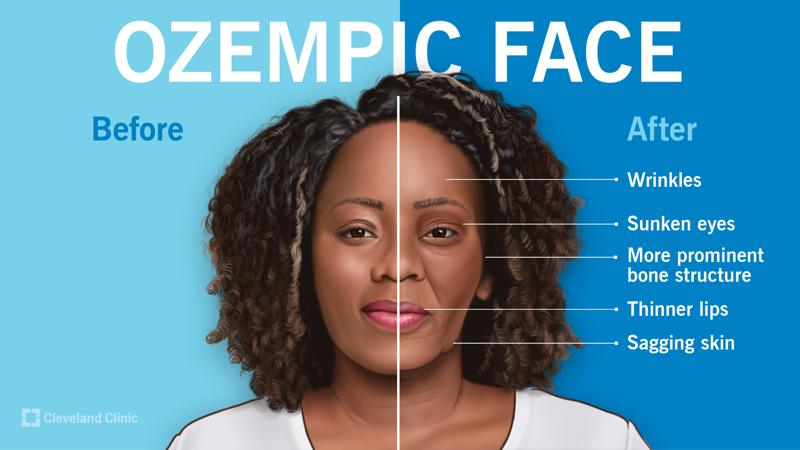
Answer: It’s not a medical condition but a colloquial term describing facial changes linked to rapid weight loss when using GLP-1 drugs like semaglutide.
- Characterized by hollow cheeks, sunken eyes, sagging skin, thin lips, and deepened wrinkles Wikipedia+15Cleveland Clinic+15PMC+15.
- The effects stem from rapid loss of facial subcutaneous fat, accompanied by reduced skin elasticity due to decreased collagen and elastin calabasasdermcenter.com+1Azouz Plastic and Cosmetic Surgery+1.
2. How Common Is It and When Does It Occur?
Answer: While there’s no precise prevalence data, it frequently appears after losing ~10–20% of body weight rapidly (e.g. 15–20 lbs in 2–6 months) looknatural.comuclahealth.org.
| Factor | Impact on Facial Changes |
|---|---|
| Speed of Weight Loss | Faster loss increases risk of facial volume depletion |
| Age | Older individuals have less collagen; more likely to sag |
| Baseline Skin Elasticity | Younger skin typically adapts better |
| Total Weight Lost | Greater loss often correlates with more pronounced facial changes |
3. What Causes These Facial Changes?
Answer: It’s the combination of fat loss and skin structural protein reduction.
- Fat pad shrinkage in cheeks, temples, and under eyes leaves the face looking drawn jprasurg.com+14Cleveland Clinic+14northwell.edu+14Wikipedia.
- Collagen and elastin depletion reduce skin rebound ability leading to sagging and wrinkles AOL+13Wiley Online Library+13Khrom MedSpa & Weight Loss+13.
4. Can “Ozempic Face” Be Prevented or Minimized?
Answer: Yes, by targeting slower weight loss and supporting skin health.
| Prevention Strategies | Rationale |
|---|---|
| Gradual weight loss (1–2 lbs/week) | Allows skin and tissues to adapt |
| High-protein diets | Help preserve muscle and fat volume |
| Optimal hydration & nutrients (C, E) | Support collagen and skin elasticity |
| Resistance training | Helps maintain muscle tone under the skin |
| Daily skincare routine & sunscreen | Helps prevent accelerated skin aging from UV exposure |
Recommendations from both Cleveland Clinic and UCLA Health emphasize slower reduction and proper nutrition as key preventive measures looknatural.com+11Cleveland Clinic+11hubmeded.com+11Allure+4Wiley Online Library+4PubMed+4hubmeded.com.
5. Is It Reversible, and What Treatments Are Available?
Answer: Effects tend to persist if weight stays off, though cosmetic treatments can significantly improve appearance.
- Non‑surgical options: dermal fillers (hyaluronic acid, Sculptra), PRP microneedling, RF tightening, Ultherapy hubmeded.com+1Khrom MedSpa & Weight Loss+1.
- Surgical options: fat grafting, facelifts combined with skin resurfacing for advanced cases American Society of Plastic Surgeons.
Case studies report many patients undergoing cosmetic procedures such as fillers or minor surgery to restore facial volume after weight loss with Ozempic or similar drugs people.comAmerican Society of Plastic Surgeons.
6. Are There Positive or Neutral Experiences?
Answer: Yes—some users report aesthetic improvement instead of aging.
- Example: a user who lost 60 lbs described looking 10 years younger, attributing the change to reduced facial inflammation and strength training during semaglutide therapy Sheilah A. Lynch, MD+14hubmeded.com+14uclahealth.org+14.
- While many experience volume loss, personal perception varies—some may achieve a more defined jawline that they like.
🔍 Summary Table of “Ozempic Face”
| Aspect | Details |
|---|---|
| Definition | Facial gauntness and sagging after rapid weight loss via GLP‑1 drugs |
| Typical Onset | After losing 10–20% of body weight within months |
| Symptoms | Hollow cheeks, wrinkles, sagging, thin lips, sunken eyes |
| Risk Factors | Fast weight loss, older age, lower baseline skin elasticity |
| Prevention Tips | Slow weight loss, high-protein diet, hydration, skin care, strength training |
| Treatment Options | Fillers, RF tightening, microneedling, facelifts, fat grafting |
| Varied Experiences | Some report improved facial definition rather than aging effects |
📌 Final Thoughts
“Ozempic Face” is mainly a side effect of rapid weight loss, not the drug itself. Though it can give a prematurely aged appearance, it poses no known medical harm Hillcrest Plastic Surgery+1nypost.com+1American Society of Plastic Surgeons+2uclahealth.org+2health.harvard.edu+2looknatural.comvidaskincare.com+12Cleveland Clinic+12Azouz Plastic and Cosmetic Surgery+12American Society of Plastic Surgeons.
To minimize risk:
- Work closely with your healthcare provider.
- Aim for moderate weight loss pace.
- Maintain a balanced diet with protein and hydration.
- Support skin health with skincare routines and sunlight protection.
If facial changes are bothersome, effective options from dermal fillers to cosmetic surgery exist to restore a more youthful contour. Always consult board-certified professionals before making cosmetic decisions.
Frequently Asked Questions (FAQs) About Ozempic Face
1. What exactly is Ozempic Face?
Ozempic Face is a popular term used to describe facial changes—such as hollow cheeks, sagging skin, and deepened wrinkles—that can occur after rapid weight loss with GLP-1 medications like Ozempic® (semaglutide).
2. Does Ozempic Face happen to everyone who takes Ozempic?
No. It mainly affects individuals who lose a significant amount of weight quickly, especially if they have lower baseline skin elasticity or are older. Some people may notice little to no facial changes.
3. How soon can Ozempic Face appear?
Facial changes can appear within a few months, typically after losing 10–20% of body weight. The exact timing depends on the rate of weight loss and individual factors like age and skin quality.
4. Is Ozempic Face harmful to my health?
Medically, it is not dangerous. It is considered a cosmetic side effect caused by loss of fat and skin elasticity, not a direct harmful effect of the medication itself.
5. Can I prevent Ozempic Face while losing weight?
Yes. Strategies include gradual weight loss (1–2 lbs per week), maintaining a high-protein diet, staying hydrated, doing resistance training, and following a daily skincare routine with sunscreen.
6. How can Ozempic Face be treated?
Common treatments include dermal fillers, PRP microneedling, radiofrequency skin tightening, Ultherapy, and, in advanced cases, surgical options like fat grafting or facelifts.
7. Will my face return to normal if I stop taking Ozempic?
Not necessarily. If the weight loss is maintained, the facial volume loss may persist. Cosmetic treatments may be needed to restore fullness and improve skin texture.
8. Are there any positive outcomes from Ozempic Face?
Some people prefer the slimmer facial look, reporting a more defined jawline and reduced puffiness. Results vary greatly from person to person.
Read More: 8 Health Problems Caused by Air Conditioning



[…] 6 Key Questions About “Ozempic Face” Answered […]