
Table of Contents
🧬 Introduction: The New Frontier of Genetic Robotics
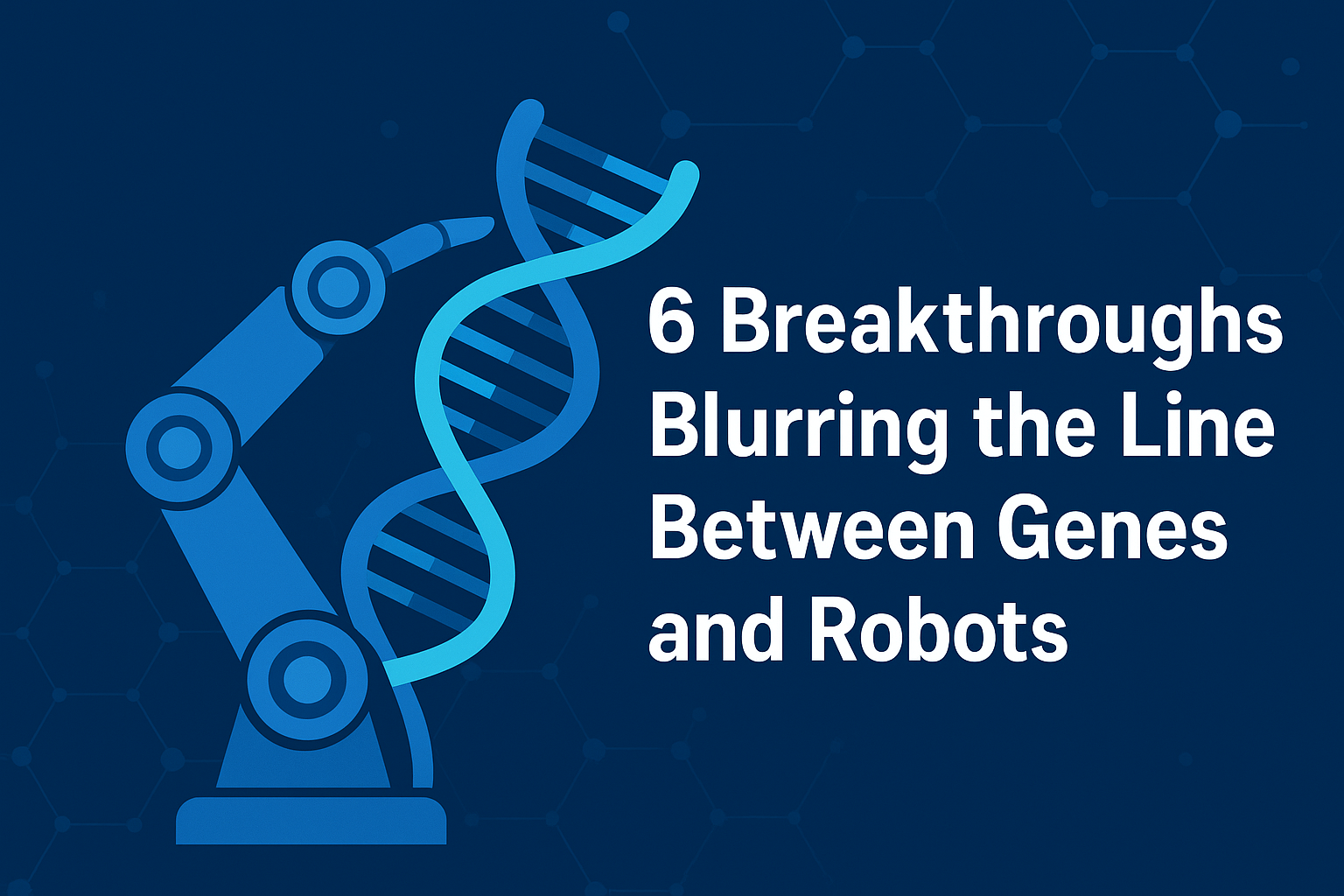
Genetic Robotics is reshaping the frontier of innovation, merging life sciences with advanced machine intelligence to create a new era of living technology. This field stands at the intersection of genetics, biotechnology, and robotics, where machines are no longer purely mechanical — they are becoming bio-mechanical entities capable of growth, adaptation, and even cellular-level healing.
At its foundation, Genetic Robotics integrates AI algorithms, bioengineering, and robotic automation to design intelligent systems that can sense, evolve, and self-repair like living organisms. These hybrid creations blur the boundary between organic life and synthetic machinery, marking a turning point in how humanity defines intelligence, motion, and life itself.
Unlike traditional robotics, which relies on programmed logic and static design, Genetic Robotics technology uses genetic materials and biological circuits to enable robots that learn and react dynamically to environmental stimuli. From DNA-based computing to biohybrid robots that mimic tissue response, the fusion of code and biology is transforming both science and industry.
The rise of Genetic Robotics signals more than a technological breakthrough — it’s an economic revolution. Governments, research institutions, and venture capitalists are investing heavily in this field, recognizing its power to redefine medicine, agriculture, defense, and even planetary exploration. As Genetic Robotics systems continue to evolve, they will drive an entire ecosystem of innovation, shaping industries built not around machines that serve life, but machines that embody it.
💡 In this new frontier, the synergy between DNA and robotics isn’t science fiction — it’s the foundation of the next industrial revolution.
Breakthrough 1: Biohybrid Robots — Machines That Breathe and Move Like Living Organisms
Biohybrid robots are at the core of Genetic Robotics innovation. These machines integrate living cells, such as muscle or nerve tissue, into mechanical systems, allowing them to mimic organic motion and respond to stimuli like living organisms.
Researchers at Harvard’s Wyss Institute have built micro-scale robots powered by heart cells that beat rhythmically, creating lifelike motion. Other experiments use muscle tissue to enable robots to grasp objects, crawl, or swim autonomously.
The fusion of robotics with living materials creates systems that can repair themselves, react to environmental changes, and even sustain biological energy. This hybridization represents a milestone in Genetic Robotics — machines that blur the line between synthetic design and organic evolution.
From agriculture to healthcare, biohybrid robots could monitor crops, detect pollution, or deliver targeted medical therapies inside the body.
Investment interest in biohybrid robotics has surged, with global funding surpassing $2.5 billion in 2024. Venture capital firms are targeting Genetic Robotics startups that merge biological materials with automation — a sector predicted to exceed one trillion dollars by 2035.
Breakthrough 2: Genetic Programming and DNA-Based Computing
In Genetic Robotics, DNA is no longer just a code for life; it’s a code for computation. Scientists are developing DNA-based processors that use genetic molecules as data carriers. These systems can execute logic operations, store massive amounts of data, and make biological decisions.
For example, DNA computing allows robots to detect specific genetic markers and trigger precise actions — such as releasing drugs only when certain biological signals are present. DNA-based logic enables decision-making at a molecular level, creating machines that are both intelligent and biologically integrated.
Genetic Robotics technology is unlocking a new generation of bio-computers that can perform billions of calculations within a single drop of solution. These machines could revolutionize medicine, environmental monitoring, and data storage by merging computation with living chemistry.
Investors are taking notice. Google Ventures, Microsoft, and Illumina have begun funding startups focused on DNA computing and Genetic Robotics. Analysts project that this market could reach $100 billion by 2030 as industries demand bio-intelligent automation.
Breakthrough 3: Neural Interfaces and Synthetic Intelligence
Neural interfaces connect the human brain directly to machines, forming one of the most profound intersections between life and technology. In the field of Genetic Robotics, these systems allow for seamless communication between biological neurons and robotic circuits.
Companies like Neuralink, Synchron, and Blackrock Neurotech have already developed brain implants capable of translating thought into digital commands. A paralyzed individual using such a system can move a cursor or control a robotic arm with pure intent.
This symbiosis between biological and synthetic intelligence defines the next phase of Genetic Robotics. By linking human cognition with robotic learning systems, the line between man and machine is gradually disappearing.
The potential applications are enormous — from restoring mobility to the disabled, to enhancing human capabilities in industrial or military environments. The brain-machine interface market is projected to reach $25 billion by 2030, with Genetic Robotics firms leading the way in transforming how intelligence itself is defined.
For investors, this emerging “neural economy” represents one of the most dynamic intersections of AI, robotics, and biotechnology in history.
Breakthrough 4: Regenerative Robotics in Medicine
Regenerative robotics brings automation into the heart of regenerative medicine, creating systems that can heal and grow human tissue. Robots now assist in 3D bio-printing skin, cartilage, and even organs using living cells.
This integration allows for unprecedented precision. Hospitals are becoming centers of biological automation, where Genetic Robotics systems manage cell cultures, control gene expression, and orchestrate tissue regeneration.
Companies like CELLINK and Organovo are pioneering technologies that enable surgeons to print tissues on demand. In the future, robotic systems will automatically regenerate damaged organs, guided by AI and genetic data.
The medical robotics market, currently valued at over $36 billion, is expected to surpass $120 billion by 2032. When integrated with biotechnology, Genetic Robotics could triple investment potential in healthcare innovation.
Investors are closely watching firms that combine robotic precision with biological healing — a dual capability that defines the future of regenerative medicine.
Breakthrough 5: Genetic Engineering for Robotic Adaptation
Genetic Robotics is also transforming how robots adapt to new environments. By using CRISPR gene-editing technology and bio-printing, engineers are designing machines capable of environmental adaptation at the genetic level.
These hybrid systems can adjust to temperature, radiation, or terrain changes by activating genetic pathways similar to those found in extremophiles — organisms that survive in harsh conditions.
The implications for defense, agriculture, and space exploration are enormous. Imagine robotic organisms that can repair themselves in outer space or autonomous machines that can grow sustainable food sources in deserts.
The integration of genetic engineering into robotics allows for adaptable, resilient, and sustainable solutions — a key driver of future technological ecosystems.
By 2035, the adaptive robotics sector, driven by Genetic Robotics innovation, is projected to be worth more than $500 billion globally.
Breakthrough 6: The Rise of Synthetic Life — Merging DNA and Machine Learning
The ultimate vision of Genetic Robotics is the creation of synthetic life — entities that merge biological DNA with artificial intelligence. Scientists are already developing synthetic cells that can communicate with machines, respond to data, and even evolve through machine learning algorithms.
This convergence of DNA and AI represents a new paradigm: self-evolving systems that improve autonomously over time. These machines could one day form ecosystems where artificial and organic life coexist, sharing information and functions.
However, this evolution comes with ethical and governance challenges. As Genetic Robotics advances, questions arise about autonomy, control, and responsibility in hybrid life forms. International frameworks are being developed to regulate the development of self-evolving robotics and synthetic organisms.
Despite the risks, the potential is transformative. From smart agriculture to self-repairing cities, the rise of synthetic life marks the dawn of a new technological civilization.
The Business Landscape: Who’s Leading the Genetic Robotics Race
The Genetic Robotics race is accelerating globally. Startups, research labs, and tech giants are competing to dominate this emerging field.
Among the leaders are Boston Dynamics (robotics), DeepMind (AI), and CRISPR Therapeutics (genetics), all of which are exploring how to merge biological adaptability with machine learning.
Countries like the U.S., Japan, and Germany are investing heavily in Genetic Robotics research, while China and South Korea are rapidly expanding into bio-automation. The field has already generated thousands of patents in synthetic biology, neural interfaces, and bio-mechanical engineering.
For investors, the most promising opportunities lie at the intersection of biotechnology and automation — companies that can convert genetic data into actionable intelligence for robotics.
Future Investment Outlook: The Decade of Genetic Robotics (2025–2035)
The coming decade will be defined by the fusion of biology and robotics. Analysts predict the Genetic Robotics market could surpass $1.3 trillion by 2035, driven by medical innovation, automation, and AI convergence.
Venture capital investment in Genetic Robotics startups has grown by 400% since 2020, signaling strong investor confidence in this hybrid field. The collaboration between AI, nanotechnology, and biotechnology will likely accelerate this growth, creating entire industries centered around living machines.
For investors, the strategy is clear: focus on companies building bridges between genetic systems and robotics. The most valuable firms will be those that can combine biological resilience with mechanical precision — the foundation of the next industrial revolution.
Conclusion: From Innovation to Integration
Genetic Robotics is no longer a futuristic fantasy — it’s the defining science of our century. By merging DNA engineering, robotics, and artificial intelligence, humanity has crossed into an era where technology doesn’t just serve life — it becomes life itself.
At its core, Genetic Robotics unites biotechnology and automation into a single intelligent continuum. This evolution is transforming not only how we design machines but how we understand existence. The boundaries between biology and technology are dissolving, giving birth to systems that can think, heal, and evolve with human-like adaptability.
A New Economic Frontier
The economic horizon of this movement is vast. As highlighted in our article on AI-Powered Biotechnology and Future Healthcare , Genetic Robotics will fuel trillion-dollar markets across medicine, agriculture, and sustainable manufacturing. Hospitals equipped with AI-driven bioprinters and regenerative robotics will grow replacement organs on demand. Smart factories will use biohybrid materials that adapt to their environment — merging Genetic Robotics technology with sustainable production.
Investment and Responsibility
For investors, the emergence of the Genetic Robotics economy mirrors the rise of the digital revolution. Startups that focus on AI-driven bioengineering, neural robotics, and synthetic tissue automation will become foundational to the global innovation index. For insights on early-stage funding strategies, see The Future of Biotech Investment — a guide that outlines how biotechnology and robotics are merging into the next growth sector.
But innovation without ethics is a fragile victory. The rise of Genetic Robotics systems raises essential questions about autonomy, consciousness, and control. As discussed in Ethics of AI and Human Integration , the challenge ahead is to balance rapid advancement with accountability. Machines that grow, heal, and adapt may soon blur the lines between human intention and artificial life — demanding new frameworks for ownership, safety, and moral boundaries.
The Evolution of Life and Intelligence
Ultimately, Genetic Robotics is more than a scientific breakthrough — it’s an invitation to co-create the next phase of evolution. By fusing biological intelligence with mechanical precision, we are not replacing humanity; we are amplifying it. This convergence empowers us to build systems that reflect both human creativity and natural resilience.
In a decade, Genetic Robotics technology will underpin every aspect of society — from healthcare to architecture, from personalized medicine to adaptive cities. It will redefine what it means to be alive, intelligent, and connected. As explored in The Future of Robotics and Synthetic Life , the journey ahead is not about choosing between human and machine — it’s about achieving harmony between the two.
The age of Genetic Robotics is the age of integration. The fusion of life and logic, DNA and design, is not the end of evolution — it is its new beginning. Humanity stands not apart from its creations but united with them, shaping a world where every innovation breathes, learns, and grows alongside us.